
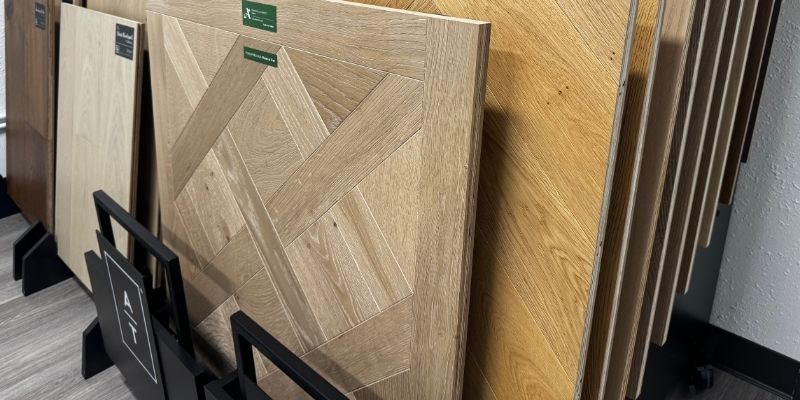
Solid or Engineered Hardwood? The Honest Guide for Seattle Homes in 2026
Both are real wood. Both can look identical on the showroom floor. But they behave very differently once they’re down in a Seattle basement, over a concrete slab, or under radiant heat. Here’s how to choose the right one for your specific home — no upsell, just the facts.
Both are real wood
Solid hardwood • Engineered hardwood — installed by LUKS
Honest comparison
Moisture • Subfloor fit • Lifespan • Cost
Service area
Seattle • Bellevue • Kirkland • Redmond • Issaquah • Sammamish
Neither product is “the fake one.” Engineered hardwood has a real hardwood wear layer on top — it’s a construction difference, not a quality difference. The right choice depends on where in your home the floor is going and how long you plan to stay.
We install both
Solid hardwood • Engineered hardwood • LVP — we recommend based on your home, not our inventory
Real-world expertise
Thousands of installs across slabs, crawlspaces, radiant systems, and century-old subfloors
Local knowledge
Seattle basements, older Craftsman subfloors, and PNW humidity all change the right answer
“Solid or engineered?” — the question that trips up more Seattle homeowners than hardwood vs. LVP
Most homeowners have already decided they want real wood. The harder question — the one that actually determines whether the floor performs well for the next 20 years — is solid or engineered. And unlike the hardwood-vs-LVP decision, this one is driven less by taste and more by where the floor is physically going.
A Sammamish rambler on a crawlspace. A Bellevue remodel with radiant heat under the tile-look floor. A daylight basement in Issaquah. A 1940s Seattle bungalow with a wood subfloor that’s never seen anything but nail-down hardwood. Each of these homes has a correct answer, and it’s not always the one homeowners assume.
This guide walks through the real differences — construction, moisture behavior, subfloor compatibility, cost, and lifespan — so you can make the call with confidence, or at least know exactly what to ask your contractor.
Key insight: Solid vs. engineered is rarely a “which is better” question. It’s a “which one is actually compatible with this room” question — and getting it backwards is one of the most expensive flooring mistakes a homeowner can make.
Engineered hardwood isn’t fake wood — here’s what it actually is
Engineered hardwood is real hardwood on top — a solid wood wear layer, the same species and finish options as solid flooring — bonded to a plywood or high-density fiberboard core underneath. That layered core is the entire point: it’s engineered to resist the expansion and contraction that solid wood goes through as humidity changes.
What engineered hardwood is made of
- A real hardwood wear layer on top (typically 2–6mm thick)
- A cross-layered plywood or HDF core underneath
- Grain running perpendicular between layers for stability
- A finish coat applied at the factory in most cases
What makes it different from solid hardwood
- Far more dimensionally stable in humidity and heat
- Can be installed over concrete, radiant heat, and below grade
- Refinishable only if the wear layer is thick enough — and only once or twice
- Often floats or glues down rather than nailing to a subfloor
The wear-layer thickness is what separates a great engineered floor from a disposable one. Anything under 2mm essentially can’t be refinished. Look for 3mm or thicker if refinishing down the road matters to you — we’ll walk you through this at the consultation either way.
Solid vs. engineered across the 8 things that matter most in Seattle homes
Category by category, honestly, without favoring either one.
1. Moisture & humidity stability
Seattle’s damp climate and seasonal humidity swings cause solid wood to expand and contract more than most homeowners expect. Engineered hardwood’s cross-layered core resists that movement dramatically better, making it the safer choice in kitchens, entries, and any space with moderate moisture exposure.
2. Where it can be installed
Engineered hardwood can go over concrete slabs, below-grade basements, and radiant floor heat systems — none of which are recommended for solid hardwood. If your project involves a daylight basement in Issaquah or a slab-on-grade addition in Bellevue, engineered is very likely your only real hardwood option.
3. Look and feel underfoot
Because the top layer of quality engineered flooring is real hardwood, it looks and feels like real hardwood — because it is. High-end engineered floors are visually and texturally indistinguishable from solid in most homes. The rare exception is very thin, budget engineered product, which can feel slightly less substantial underfoot.
4. Refinishing & long-term lifespan
Solid hardwood can be sanded and refinished many times over its 50-to-100-year life. Engineered hardwood can only be refinished if the wear layer is thick enough — usually once, sometimes twice, occasionally not at all. For homeowners planning to stay a very long time, solid’s renewability is the single biggest long-term advantage.
5. Installation speed & disruption
Engineered flooring typically floats, glues, or click-locks into place, which is faster and less disruptive than the nail-down process solid hardwood requires. For occupied homes or tight renovation timelines, that difference in install time and mess is meaningful.
6. Subfloor compatibility in older homes
Many Seattle homes — Craftsman-era bungalows, mid-century ranches — have subfloors that have shifted or settled over decades. Engineered hardwood’s floating or glue-down installation tolerates minor imperfections better than nail-down solid, which needs a flatter, more consistent wood subfloor to perform well long-term.
7. Upfront cost in Seattle
Engineered hardwood generally installs for less than solid in the Seattle market, largely due to faster labor. The gap narrows at the high end, where premium engineered products with thick wear layers can approach solid hardwood pricing.
8. Resale value & buyer perception
In listings, “hardwood floors” reads the same whether it’s solid or engineered — and most buyers can’t tell the difference by eye. But in premium Eastside neighborhoods, solid hardwood in main living areas still carries a small perception advantage, particularly among buyers who ask directly during showings.
Which one fits your home? Read the scenario that sounds most like you.
These are the honest signals we use in real Seattle and Eastside consultations — not a sales script.
Engineered hardwood, full stop. Solid hardwood cannot be nailed to concrete, and gluing it directly to a slab isn’t recommended in a climate like Seattle’s. Engineered is built for exactly this situation.
Engineered hardwood is specifically designed to handle the temperature cycling of radiant systems. Solid wood expands and contracts too much over a heat source to be a safe long-term choice.
Engineered hardwood is the real-wood option for below-grade spaces. Solid hardwood is not recommended below grade under any circumstances, regardless of moisture barriers.
Solid hardwood. The ability to refinish it repeatedly over the next 50-plus years is the strongest long-term argument in its favor — nothing else in real wood flooring matches that renewability.
Engineered hardwood installs faster with less dust and disruption than nail-down solid — a real consideration if you’re living in the home during the project.
Solid hardwood. If your subfloor is a standard wood subfloor above grade and the room isn’t exposed to major moisture swings, solid hardwood is a completely reasonable — often preferred — choice.
The most common answer for larger Eastside remodels: Solid hardwood on the main floor where the subfloor and moisture conditions support it, engineered in the basement, over the slab addition, or anywhere radiant heat is involved. LUKS plans these transitions so the floors feel intentional, not mismatched.
What does each floor actually cost in Seattle and the Eastside?
Seattle’s cost of living runs well above the national average, and flooring labor reflects that. Here’s a realistic picture of 2026 pricing for both options.
| Floor type | Installed cost / sq ft (Seattle) | Typical room range | Notes |
|---|---|---|---|
| Engineered hardwood | $9 – $20 / sq ft | $2,000 – $4,500 per room | Faster labor; works over slab, radiant, and below grade |
| Premium engineered (thick wear layer) | $14 – $22 / sq ft | $3,200 – $5,000 per room | 3mm+ wear layer can be refinished once or twice |
| Solid hardwood | $11 – $25 / sq ft | $2,500 – $6,000 per room | Species, width, and subfloor prep affect final cost |
| Refinishing existing solid hardwood | $4 – $8 / sq ft | $1,800 – $3,400 typical project | ROI averages 147% — usually the smartest investment if you already have solid wood |
Important: Engineered isn’t automatically the “cheap” option — high-quality engineered with a thick, refinishable wear layer can cost as much as mid-range solid hardwood. Don’t choose based on price alone without checking the wear-layer spec.
Why this decision matters more in Seattle than in drier climates
The solid-vs-engineered decision is far less forgiving in the Pacific Northwest than in a dry, stable climate. Here’s what makes Seattle and Eastside homes different.
Crawlspaces and moisture below the floor
Many Seattle-area homes sit on vented or semi-vented crawlspaces where ground moisture and seasonal humidity reach the underside of the subfloor. Solid hardwood installed over an unmanaged crawlspace is a common source of cupping and gapping complaints. Engineered hardwood’s stability makes it a safer bet in these homes.
Slab additions and daylight basements
Eastside remodels frequently add square footage over a concrete slab — a daylight basement in Sammamish, a slab-on-grade addition in Redmond. Solid hardwood is not an option in these spaces. Engineered hardwood is the only way to get real wood underfoot there.
Radiant heat in premium remodels
Radiant floor heat has become common in higher-end Bellevue, Mercer Island, and Medina renovations, especially in bathrooms and primary suites. Engineered hardwood is built to tolerate the temperature swings; solid hardwood over radiant heat is a recipe for cracking and separation.
Older subfloors in Craftsman and mid-century homes
Homes from the 1920s through the 1960s often have subfloors that have shifted with decades of settling. Engineered hardwood’s floating or glue-down installation tolerates that variation better than the precise, flat subfloor nail-down solid hardwood prefers.
Quick reference: solid vs. engineered hardwood side by side
| Category | Solid hardwood | Engineered hardwood |
|---|---|---|
| Construction | One piece of solid wood, top to bottom | Real wood wear layer over a plywood/HDF core |
| Installation method | Nailed or stapled to a wood subfloor | Floated, glued, or nailed depending on product |
| Where it can go | Above-grade wood subfloors only | Concrete slabs, below grade, radiant heat, wood subfloors |
| Moisture stability | More prone to expansion, cupping, gapping | Significantly more dimensionally stable |
| Refinishable | Yes — multiple times over 50–100 years | Sometimes — once or twice, only if wear layer is thick |
| Upfront cost (Seattle) | $11–$25/sq ft installed | $9–$20/sq ft installed |
| Resale perception | Slight edge in premium neighborhoods | Well-received, nearly indistinguishable visually |
| Best for | Above-grade main living areas, long-term owners | Slabs, basements, radiant heat, faster remodels |
The solid vs. engineered questions Seattle homeowners ask us most
Not sure which one your home actually needs? Let’s find out together.
LUKS Construction installs both solid and engineered hardwood across Seattle and the Eastside. We’ll check your subfloor, your moisture conditions, and your goals — and tell you honestly which one belongs in your home.
Tip: Tell us whether your project involves a slab, basement, radiant heat, or an older subfloor — that one detail usually settles the solid-vs-engineered question before we even see the home.
Solid and engineered hardwood installation across Seattle and the Eastside
LUKS Construction installs solid hardwood, engineered hardwood, LVP, and hardwood stairs across Seattle and the greater Eastside. We also refinish and restore existing hardwood floors throughout King and Snohomish County.
Not sure if we serve your area? Call 425-971-2895 — chances are we are already working near you.
Bellevue
Kirkland
Redmond
Sammamish
Issaquah
Mercer Island
Bothell
Kenmore
Shoreline
Lynnwood
Edmonds
Mill Creek
Mukilteo
Everett
Newcastle
Snoqualmie
Bainbridge Island
Medina
Lake Forest Park
Service area includes Seattle, Bellevue, Kirkland, Redmond, Sammamish, Issaquah, Mercer Island, Bothell, Kenmore, Shoreline, Lynnwood, Edmonds, Mill Creek, Mukilteo, Everett, Newcastle, Snoqualmie, Bainbridge Island, Medina, and Lake Forest Park.


