
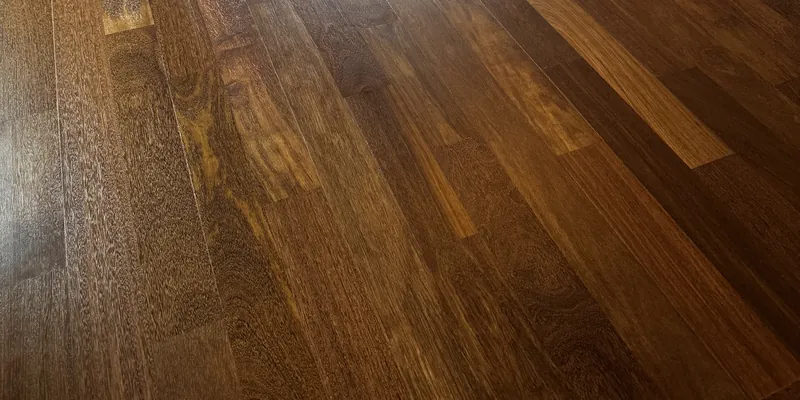
Ipe Floor Refinishing in Capitol Hill, Seattle
We refinished the Brazilian walnut (ipe) floors in a Capitol Hill home in Seattle. We sanded them to bare wood, filled the gaps between boards, and applied three coats of Pallmann water-based finish in satin. The job took four days, and the floor’s deep, varied color is back.
The situation
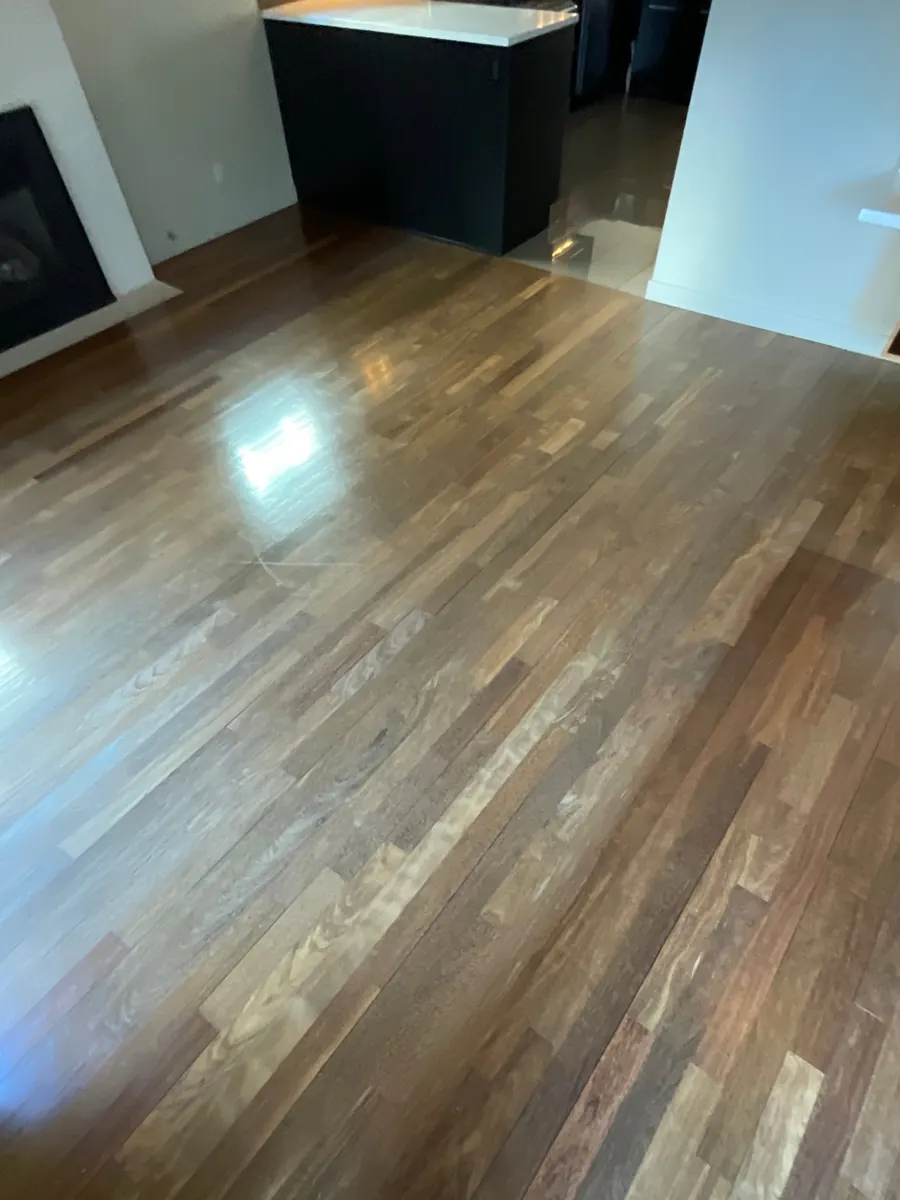
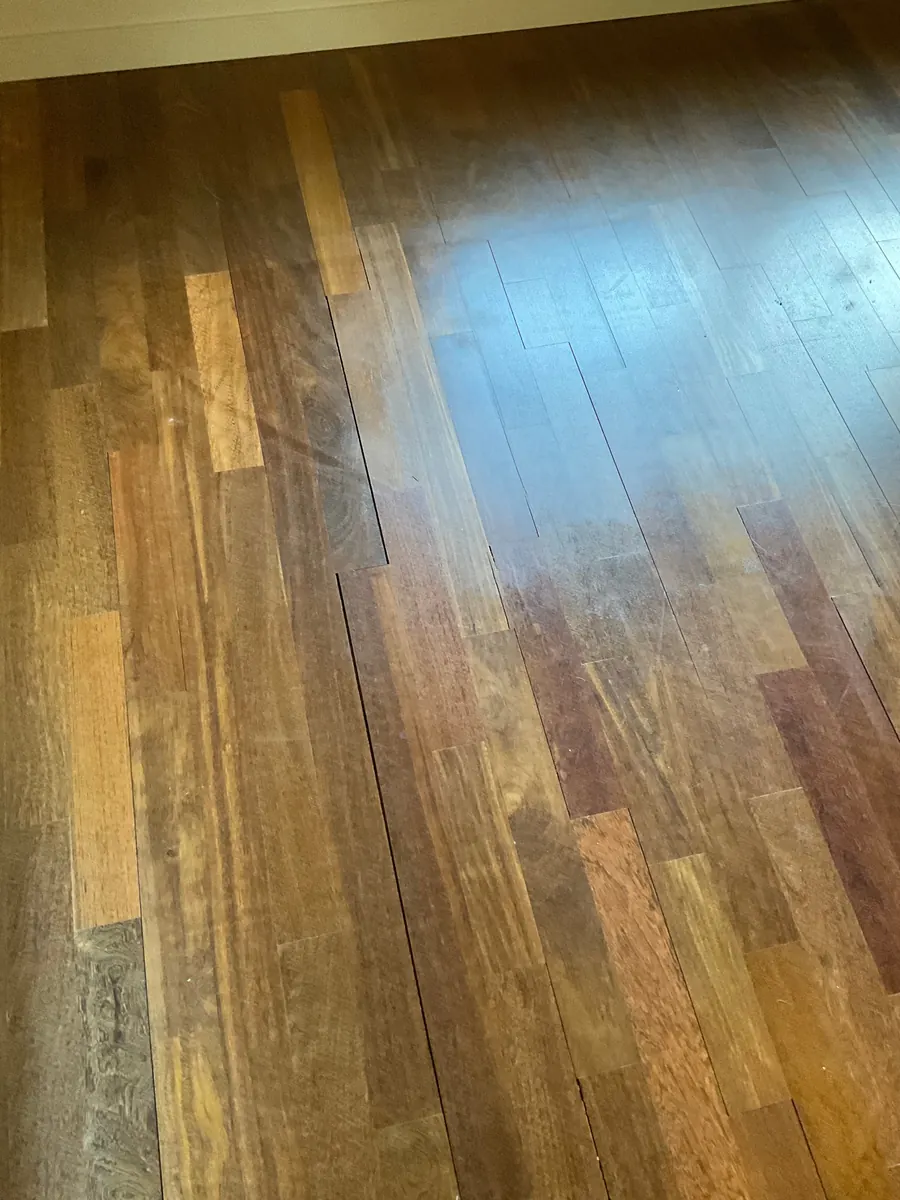
These ipe floors run through the living room and main living areas. Years of foot traffic had worn the finish down to a dull, grayish haze along the main walkways. Fine scratches showed in every patch of window light, and gaps had opened between some of the boards. The original color variation, from honey to dark chocolate, was still there under the old finish, but you could barely see it. The homeowners wanted that color back without replacing a floor that was otherwise in good shape.
What we did
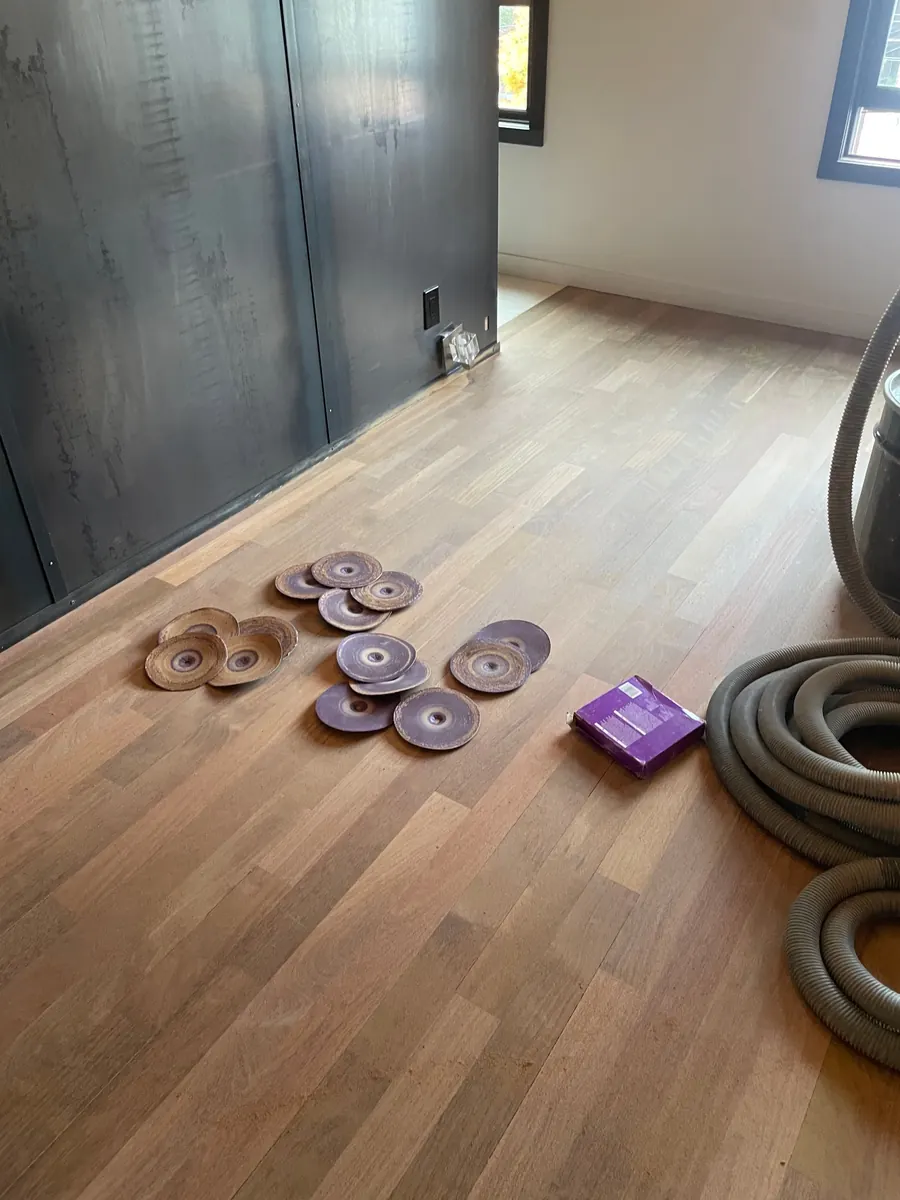
Ipe is one of the hardest woods used for flooring. That’s why it lasts, and it’s also why it’s slow to sand. It’s dense and naturally oily, and it wears through sandpaper quickly. The stack of used discs in the photo is normal for this species.
- Sanded to bare wood. Our installers sanded the whole floor back to bare wood, edges included, to remove the worn finish and the scratches under it.
- Filled the gaps. We filled the gaps between boards with a filler mixed from the floor’s own sanding dust. Because the filler is made from the same ipe, it matches the surrounding boards instead of showing up as lines of off-color putty.
- Finished in water-based satin. Three coats of Pallmann water-based finish. Water-based finish dries clear and stays clear, so the ipe keeps its natural red-brown tones instead of turning amber over time the way oil-based finish does. It also cures faster, with much less odor, which makes it easier to live around during the job. Satin gives a soft glow that shows off the grain without the mirror shine that highlights every footprint.
The whole job, from first sanding to final coat, took four days.
The result
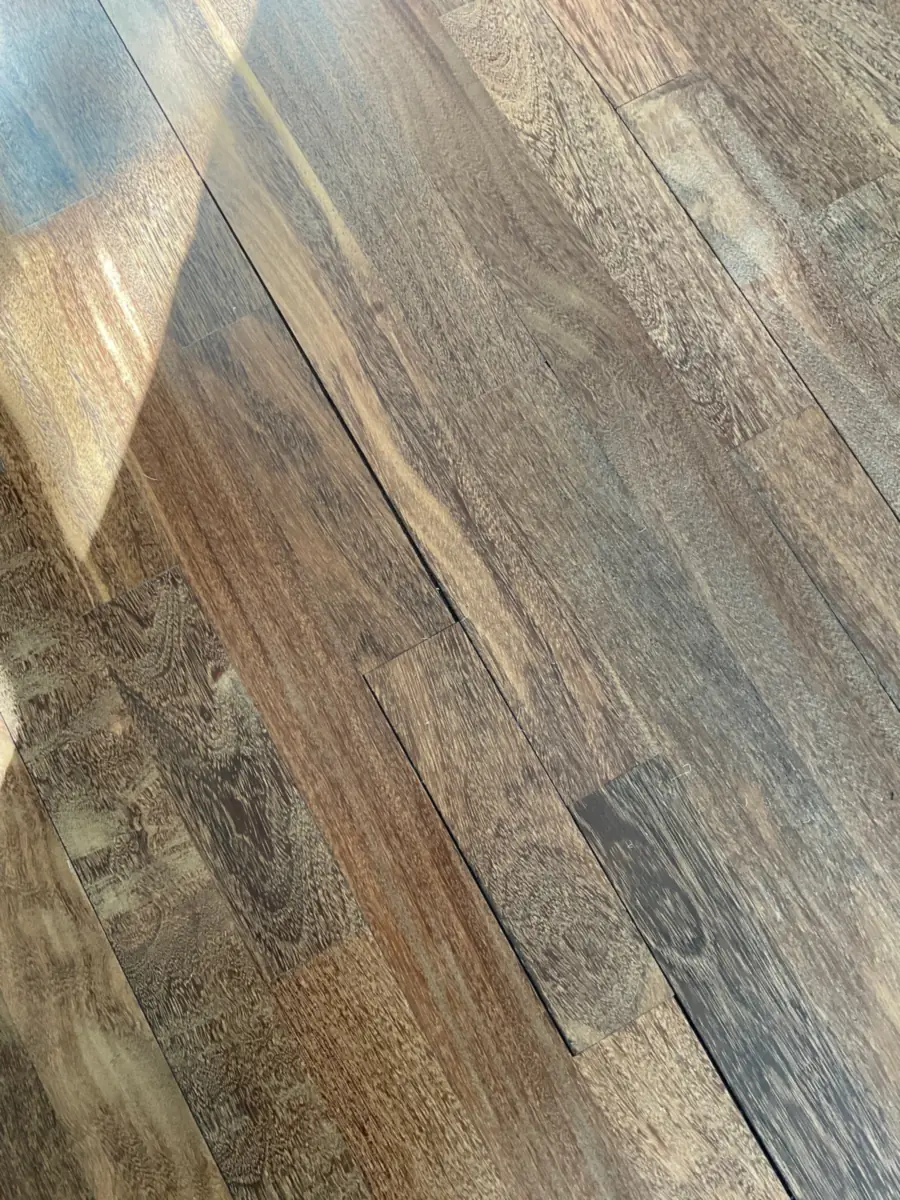
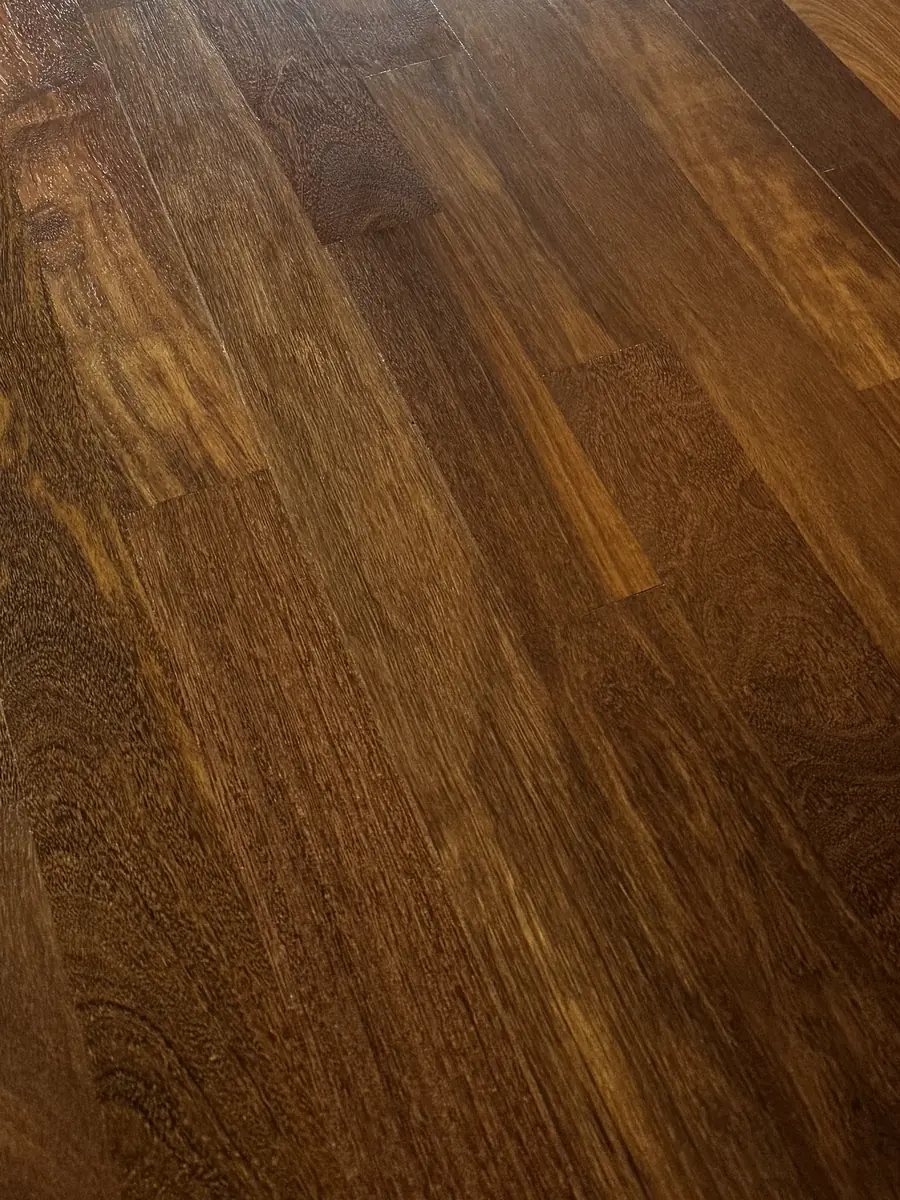
The after photo shows what the old finish was hiding: strong grain, the full range of ipe’s colors, and an even satin sheen from wall to wall. The filled seams blend into the boards around them, and the floor looks like it did when it was first installed, with a new protective finish for the years ahead.
Thinking about hardwood floor refinishing in Seattle?
Exotic hardwoods like ipe, cumaru and Brazilian cherry need a different sanding approach than oak. We’re happy to take a look and tell you what your floor needs. Call (425) 971-2895 or request an estimate below.
Request a Free EstimateSee our Seattle hardwood flooring services →Our hardwood floor refinishing process →


